



Blog
What Is Perfume Sillage? Meaning and Examples

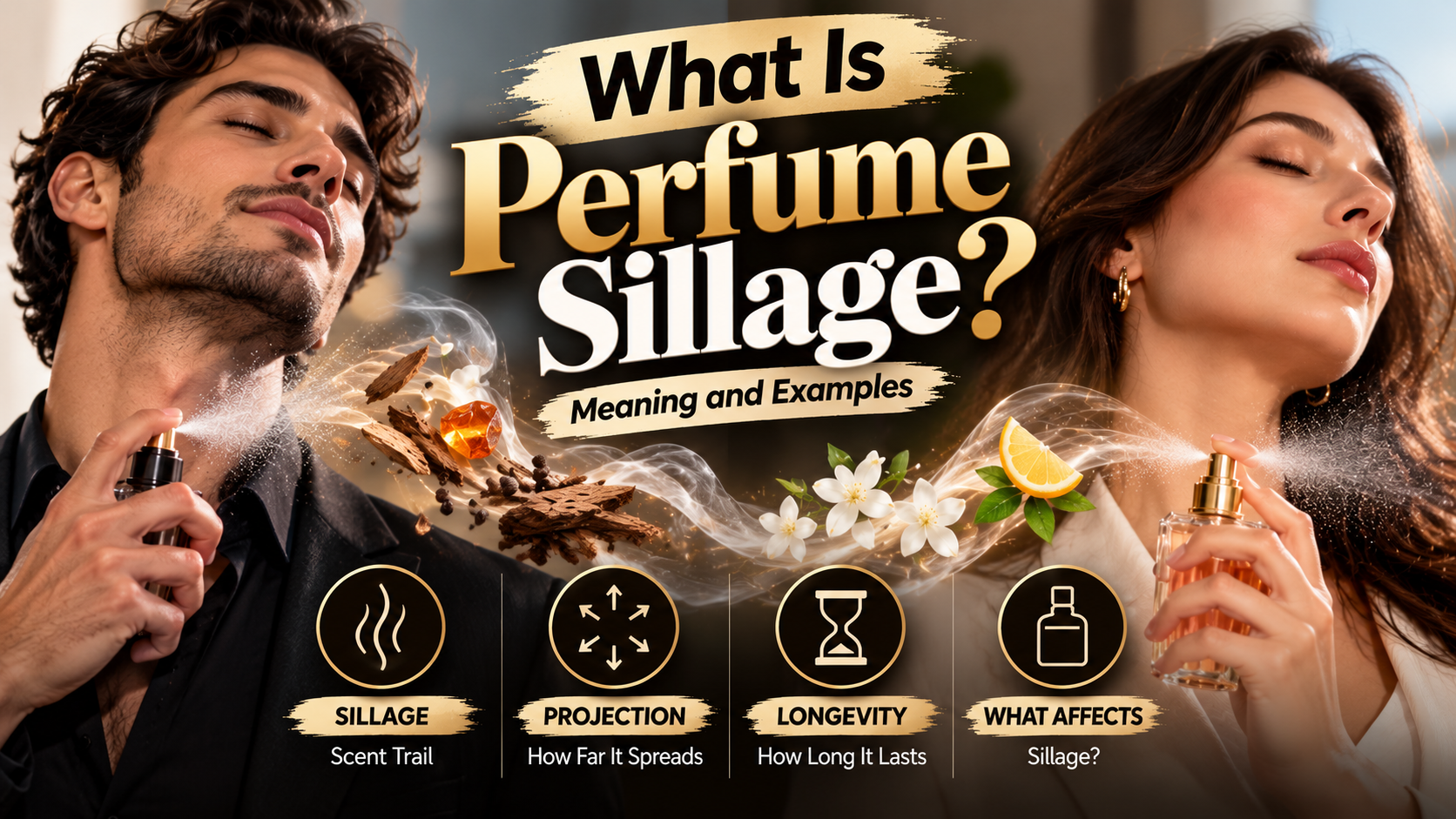
Have you ever noticed someone’s perfume after they walked past you? That lingering smell is an example of sillage. If you want to understand what is perfume sillage, it means the scent trail a fragrance leaves around its wearer. Some perfumes stay close to the skin, while others leave a trail that people notice as the wearer moves.
Sillage can help you choose a perfume for work, everyday wear or an evening out. However, a perfume that smells strong straight after spraying will not always leave a strong trail later. Understanding how sillage works helps you choose a fragrance that suits your preferences and the places where you plan to wear it.
What Is Perfume Sillage?
The easiest way to understand what is perfume sillage is to think about the scent a perfume leaves in the air around you. The word sillage comes from French and refers to a wake or trail left behind. In perfumery, it describes how a fragrance spreads beyond the skin and how noticeable it may be to people nearby or after the wearer has passed.
Imagine wearing a light floral perfume to work. A colleague sitting beside you may notice it, while someone across the room may not. Another perfume might leave a more noticeable trail as you walk through the same space. Both have sillage, but the strength of their scent trails differs.
Sillage can change throughout the day. The fresh smell you notice after spraying may become softer as the perfume develops. This is why you should not judge a fragrance by its first few minutes alone.
What Does Sillage Mean in Perfume?
The question what does sillage mean in perfume is about how a fragrance leaves a scent trail beyond your skin. It does not mean everyone in a room will smell your perfume, or that the scent will remain in the air for hours after you leave.
The perfume sillage meaning becomes clearer when you compare two fragrances. One may be noticeable only when someone comes close to you. Another may leave a trail that people notice as you walk past. The formula, the amount you apply and the surrounding conditions can all affect the result.
Your nose also affects how you judge a fragrance. After smelling the same perfume for a while, you may stop noticing it as much. This does not always mean the perfume has disappeared; other people may still smell it. When exploring fragrance information on Aromora, remember that scent notes alone cannot tell you exactly how noticeable a perfume’s trail will be.
Sillage vs Projection vs Longevity
Sillage, projection and longevity describe three different parts of a perfume’s performance. People often mix them up, but each term answers a different question. Understanding perfume sillage vs projection helps you compare fragrances based on what you want them to do.
| Fragrance term | What it means | Example |
| Perfume sillage vs projection | Sillage describes the scent trail; projection describes how far the scent spreads from the wearer. | Someone notices your perfume as you walk past. |
| Fragrance projection | How noticeable the scent is at a distance from your skin. | A friend can smell your perfume while standing nearby. |
| Perfume longevity | How long the fragrance remains noticeable on your skin or clothing. | You can still detect the scent several hours after applying it. |
Scent projection often feels stronger soon after application, then becomes softer as the fragrance develops. Sillage describes the trail the perfume leaves, which can also change over time. These qualities can work together, but they do not always match.
Scent longevity answers another question: how long does the perfume last? A fragrance may remain on your skin for hours without leaving a strong trail. Another may smell noticeable at first but fade sooner. If you want both a lasting scent and a noticeable trail, check these qualities separately.
What Affects Perfume Sillage?
Several factors affecting perfume sillage explain why two fragrances can behave differently, even when they smell similar. The ingredients, their balance, the amount you apply and the conditions around you all play a part.
1. Fragrance Ingredients and Notes
Perfumers often describe a fragrance through top, heart and base notes. Top notes create the first impression, heart notes form the main character of the scent, and base notes often remain as the perfume settles on the skin.
These stages affect scent diffusion, which describes how fragrance molecules spread through the air. Some ingredients evaporate faster than others, so the smell changes over time. However, rich base notes do not always create stronger sillage. Fresh, citrus and floral perfumes can also leave a noticeable trail, depending on their formulas.
2. Fragrance Concentration
Fragrance concentration refers to the amount of aromatic material in a perfume. Labels such as eau de toilette, eau de parfum and parfum give a general idea of concentration, but they do not tell you exactly how far a fragrance will spread.
A higher concentration does not guarantee stronger sillage. Two eau de parfum fragrances can perform differently because they use different ingredients and blends. When comparing perfumes, test how each one smells instead of choosing by concentration alone.
3. Skin, Weather and Application
Your skin and surroundings can change how you experience a perfume. Temperature and airflow affect how a scent moves through the air, while your skin can influence how the fragrance develops. The same perfume may seem different on different people or in different settings.
The amount you spray matters, too. Applying more perfume may increase fragrance intensity, but too much can overwhelm people in a small room. Start with a modest amount and check how noticeable the scent becomes before applying more.
Strong vs Weak Perfume Sillage
Strong vs weak perfume sillage describes how noticeable a scent trail is. It does not tell you whether a perfume is good or bad. A soft trail may suit an office or a shared space, while a stronger one may suit an evening out.
- Soft sillage: People usually notice the scent when they come close to you. It can work well for daily wear and quiet settings.
- Moderate sillage: People nearby can notice the perfume without it taking over the room. It can suit everyday activities and social plans.
- Strong sillage: The scent trail is more noticeable as you move. Use it thoughtfully in crowded or enclosed spaces.
These descriptions are general guides, not fixed measurements. A perfume may seem stronger in a warm room than it does outdoors. Choose a scent that suits the place where you plan to wear it and consider the comfort of people around you.
How to Make Perfume Sillage Stronger
If you want to know how to make perfume sillage stronger, start by choosing a fragrance that naturally leaves the kind of trail you like. Changing how you apply it may help, but adding more sprays will not always give you the result you want.
Try these simple steps:
- Moisturise your skin: Apply an unscented moisturiser before using perfume. This may help the scent remain noticeable for longer on dry skin.
- Use a sensible amount: Follow the product directions and start with a modest number of sprays. Check the result before applying more.
- Let the scent settle: Avoid rubbing your wrists together after spraying. Give the fragrance time to develop.
- Check it later: Smell the perfume after the opening notes fade and again later in the day. This gives you a better idea of its scent trail and staying power.
- Test different fragrances: Do not assume that a higher concentration always means stronger sillage. Compare how noticeable each perfume is at a normal conversational distance.
When comparing perfumes on Aromora pay attention to how the scent changes after the first few minutes. A perfume may smell strong at first but become softer, while another may keep a more noticeable trail. Testing over time gives you a fairer comparison than repeatedly spraying more perfume.
What Is Sillage in Fragrance? Everyday Examples
The question what is sillage in fragrance becomes easier to understand through everyday examples. The trail depends on the perfume’s formula and the conditions in which you wear it, so the scent family alone cannot predict its performance.
A fresh citrus perfume may leave a light trail when someone walks past you outdoors. A musk fragrance may stay closer to the skin and become more noticeable during a conversation. A rich amber or woody perfume may leave a stronger trail, but not every fragrance in these families behaves the same way.
This is why two floral perfumes can have different sillage, just as two woody perfumes can perform differently. The fragrance scent trail depends on the complete blend, not just one ingredient or note. Testing an individual perfume gives you a better idea of its behaviour than relying on its scent description alone.
How to Test a Perfume’s Sillage
You can learn a lot about a perfume by testing it carefully. Apply it according to the product directions, then notice how it smells after a few minutes and later in the day. Avoid judging it only by how strongly you can smell it on your own wrist.
Check three things: can you smell it only on your skin, can someone nearby notice it, and does it leave a trail when you move? If possible, ask someone you trust for their view. You may become less aware of a fragrance after wearing it for a while, so another person can offer a useful second opinion.
Try to compare perfumes under similar conditions. A scent may behave differently outdoors, in a warm room or in a space with moving air. Perfume can change with the setting, so testing fragrances in similar conditions helps you make a fairer comparison.
Frequently Asked Questions
Which perfume has high sillage?
Some perfumes with amber, musk, woody or rich floral blends may leave a strong scent trail, but the formula matters more than the scent family alone. Test the perfume on your skin and check how noticeable it remains after the opening notes fade.
What is sillage in a perfume?
Sillage in a perfume is the scent trail it leaves around the wearer as the fragrance spreads through the air. Parfum often has a higher fragrance concentration, but this does not guarantee stronger sillage because the ingredients and formula also affect performance.
What are the 5 stages of fragrance?
Perfume is often described through top notes, heart notes, base notes, dry-down and the scent that lingers afterwards. These stages help explain how a fragrance changes over time, although there is no single official five-stage system for every perfume.
Which perfume has the best sillage?
The best sillage depends on whether you prefer a subtle, moderate or strong scent trail and where you plan to wear the fragrance. Compare perfumes on your skin over time instead of choosing by concentration or first impression alone.