



Blog
Can Two Perfumes With the Same Notes Smell Completely Different?

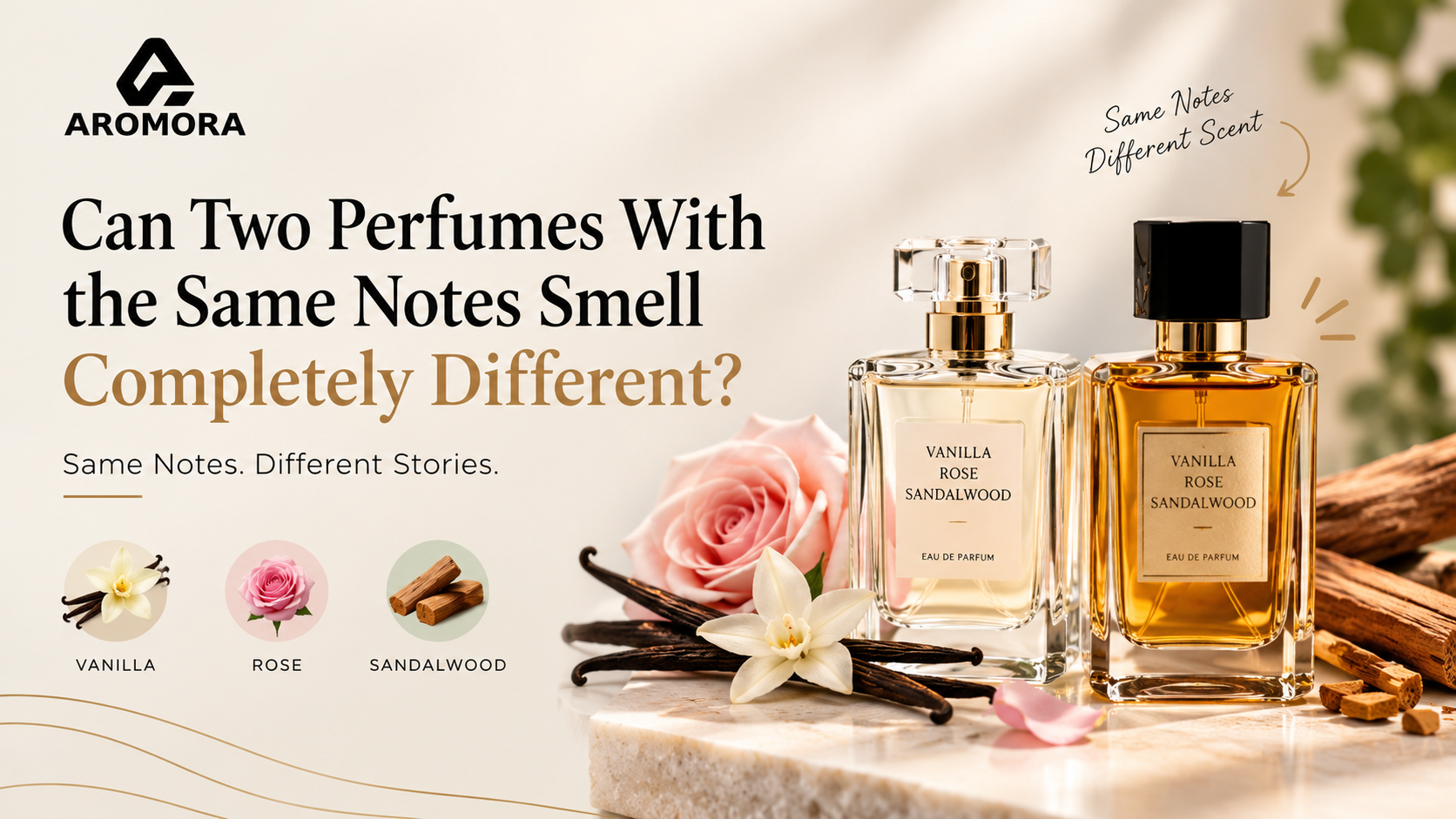
Have you ever tried two perfumes that list vanilla, rose or sandalwood, yet found that they smell nothing alike? One might feel fresh and light, while the other smells warm, rich or sweet. This can happen even when both perfumes share several perfume notes.
The reason is simple: a perfume is more than a list of ingredients. The way a perfumer blends those ingredients, the materials they choose and how the scent changes over time all shape the final smell. Concentration and the way a fragrance wears on your skin can also affect your experience.
Understanding these differences helps you choose fragrances with more confidence. Aromora explores the main factors below, so you can look beyond a perfume’s note list and understand what makes each scent unique.
Why Can Two Perfumes With the Same Notes Smell Different?
Two perfumes can share the same named notes but use different formulas. A vanilla note, for example, might smell creamy and soft in one fragrance but dark, smoky or sugary in another.
Here are the main reasons:
- Different proportions: One perfume may highlight vanilla, while another gives more space to woods, spices or citrus.
- Different ingredients: Perfumers can use different natural materials and aroma ingredients to create a similar scent impression.
- Different accords: Supporting scents can change how you notice the main notes.
- Different concentrations: The amount of fragrance material in the formula can affect its strength and overall character.
- Different wear conditions: Skin, temperature and the time since spraying can change how a fragrance smells to you.
These factors work together. A perfume that opens with fresh citrus may become soft and woody, while another with similar listed notes may develop a sweeter, warmer finish.
What Are Fragrance Notes?
If you have wondered what are fragrance notes, they are the scent descriptions used to explain the different smells you may notice in a perfume. Common examples include bergamot, rose, jasmine, vanilla, musk and sandalwood.
The phrase perfume notes meaning refers to what these listed scents tell you about a fragrance. However, a note list does not reveal the full formula or tell you exactly how the finished perfume will smell.
To understand fragrance notes explained in simple terms, think of the notes as clues rather than a complete recipe. Two perfumes can list the same ingredients or scent impressions but arrange them in different ways.
Understanding Top, Middle and Base Notes
Many perfumes develop through three broad stages. These stages help explain top middle and base notes, although the scent does not change in three perfectly separate steps.
| Note type | What you may notice | Common examples |
| Top notes | The first impression after spraying | Bergamot, lemon, grapefruit |
| Middle notes | The main character as the opening settles | Rose, jasmine, lavender |
| Base notes | The deeper scent that remains later | Vanilla, musk, sandalwood |
Top notes often fade sooner because many materials used for them evaporate more quickly. Middle notes help shape the perfume’s character, while base notes often give it depth and a longer-lasting impression.
This is why smelling a perfume only once may not give you the full picture. Its opening could be bright and citrusy, but the later scent may feel creamy, woody or musky.
How Fragrance Accords Change a Perfume
Individual notes rarely tell the whole story. Perfumers combine materials to create Fragrance accords: blended scent effects that work together to create a particular impression.
For example, vanilla may smell sweet and creamy when paired with soft musk. Combine it with smoky woods and spices, and it may feel darker and richer. The vanilla note remains part of the scent, but the surrounding materials change how you experience it.
This is a key part of Fragrance composition. A perfumer balances the materials to create a complete scent rather than simply adding separate smells to a bottle.
It also explains why types of perfume notes do not always predict whether a fragrance will smell similar to another one. Two perfumes may share floral, woody or sweet notes but use different accords to create their own character.
Why Ingredient Choice and Quality Matter
A note name does not tell you exactly which material a perfumer used or how it smells in the finished formula. Perfumers can create a similar scent impression with different combinations of natural and synthetic aroma materials.
For example, two perfumes may both list roses. One could give the rose a fresh, airy feel, while the other surrounds it with powdery notes, woods or sweet materials. The difference comes from the full blend, not just the rose label.
The same applies to Perfume ingredients such as musk, amber and sandalwood. Different materials can create different levels of softness, warmth, freshness or depth.
It is better to judge a perfume by its overall smell than to assume that a longer ingredient list or a particular type of ingredient automatically means better quality.
Does Perfume Concentration Affect the Smell?
Yes, concentration can influence how a perfume feels and performs, but it does not explain every difference between two fragrances.
Eau de Toilette (EDT), Eau de Parfum (EDP) and perfume extract generally refer to different concentration styles. However, the exact strength varies by product, and a higher concentration does not automatically mean a better scent or longer wear.
Two perfumes with similar notes can still smell different because their formulas differ. Even two versions of a fragrance may not smell identical if the brand changes the formula as well as the concentration.
When comparing perfumes, consider these three dimensions:
- Scent intensity: How strong the fragrance smells to you.
- Fragrance projection: How far the scent travels from your skin.
- Scent longevity: How long you can smell it after application.
These qualities are related, but they are not the same. A perfume may smell strong at first without lasting all day, while a softer fragrance may remain close to the skin for hours.
How Skin and Weather Affect a Perfume
The same perfume can smell slightly different from one person to another. Skin moisture, temperature, skincare products and other scents on the skin may affect how a fragrance develops. Your own sense of smell and expectations can also shape what you notice.
Warm weather can make some fragrances feel more noticeable, while cooler conditions may change how quickly you notice different parts of a scent. This does not mean that skin chemistry changes every perfume dramatically; the effect varies from person to person and from fragrance to fragrance.
For a fair comparison, spray each perfume on clean skin and give it time to develop. Avoid judging a scent only from a paper strip or the first few minutes after application.
How Fragrance Families Help You Compare Perfumes
A Fragrance family groups perfumes by their overall scent character. Common families include floral, woody, fresh, amber and gourmand fragrances. Some perfumes sit between several families, so these categories are useful guides rather than strict rules.
Understanding Fragrance aroma families can help you narrow down what you enjoy. For example, if you like vanilla but dislike very sweet perfumes, look for fragrances that balance vanilla with woods, citrus or musk.
A perfume’s Perfume scent profile describes its overall character, including its opening, heart, base and the way these elements work together. This gives you a more useful picture than a list of notes alone.
How to Compare Two Perfumes With Similar Notes
Use this simple process when you test two fragrances:
- Read the note lists: Look for shared notes, but remember that the lists do not show the full formula.
- Smell each opening: Notice whether the first impression feels fresh, sweet, spicy or green.
- Wait for the dry-down: Check the scents again after around 30 minutes and later in the day.
- Compare the balance: Ask which notes stand out most and whether the perfume feels light, creamy, woody or rich.
- Test them separately: Try one perfume on each arm, or test them on different occasions to avoid mixing the scents together.
- Consider the setting: Your surroundings, the weather and other scented products may affect what you notice.
This approach makes Scent development easier to understand. It also helps you decide whether a perfume suits your preferences rather than buying it based on familiar note names.
What Do Scent Layers in Perfume Tell You?
Scent layers in perfume describe how the fragrance may change from its first spray to its later stages. They help you understand the journey of a scent, but they do not guarantee a fixed timeline.
For instance, one perfume may open with lemon and settle into soft woods. Another may start with citrus too, but develop into musk and vanilla. Both may share a top note while creating very different experiences overall.
When you compare fragrances, pay attention to the full journey, not just the opening. The scent you enjoy after an hour may matter more to you than the first impression.
Can You Combine Two Perfumes With Similar Notes?
Yes, you can layer two perfumes, but shared notes do not guarantee that they will blend well. Two vanilla fragrances, for example, may create a richer sweet scent, or they may compete and become too heavy.
Try these simple tips:
- Start with one light spray of each perfume.
- Test the combination on a small area before wearing it out.
- Pair scents with a shared note or a compatible character.
- Give the blend time to settle before deciding whether you like it.
You do not need to layer perfumes to make them smell more individual. Each fragrance already has its own balance of materials and accords.
Why the Right Perfume Is About More Than Its Notes
Two perfumes can share several perfume notes and still smell completely different because the note list only tells part of the story. The blend, supporting accords, concentration and scent development all help shape the final fragrance.
When choosing a perfume, look beyond familiar ingredients. Test it on your skin, give it time to develop and notice how its opening compares with its later scent. Aromora recommends focusing on the fragrance you actually enjoy wearing, rather than choosing by note list alone. With a little patience, you can find scents that suit your taste with greater confidence.
Frequently Asked Questions
Can two perfumes with the same notes smell completely different?
Yes. Different formulas, ingredient choices, proportions and supporting accords can make perfumes with the same listed notes smell very different.
What is the 3:1:1 rule for perfume?
There is no single, widely accepted 3:1:1 rule across the perfume industry. Treat it as a possible informal blending guideline, not a universal formula used by every perfumer.
What is the 30/50/20 rule for perfume?
Some sources describe it as 30% top notes, 50% middle notes and 20% base notes. However, it is not a fixed industry standard, and real perfume formulas vary.
What kills the smell of perfume?
Heat, direct sunlight and poor storage can damage a perfume over time. On skin, washing, rubbing, dry skin and changes in your sense of smell can also affect how long you notice it.
Is it okay to combine two perfumes?
Yes. Start with small amounts and test the combination first. Perfumes with compatible scent profiles may blend well, but some combinations can smell too strong or clash.