



Blog
What Does Neroli Smell Like? A Complete Guide to This Fresh Floral Scent

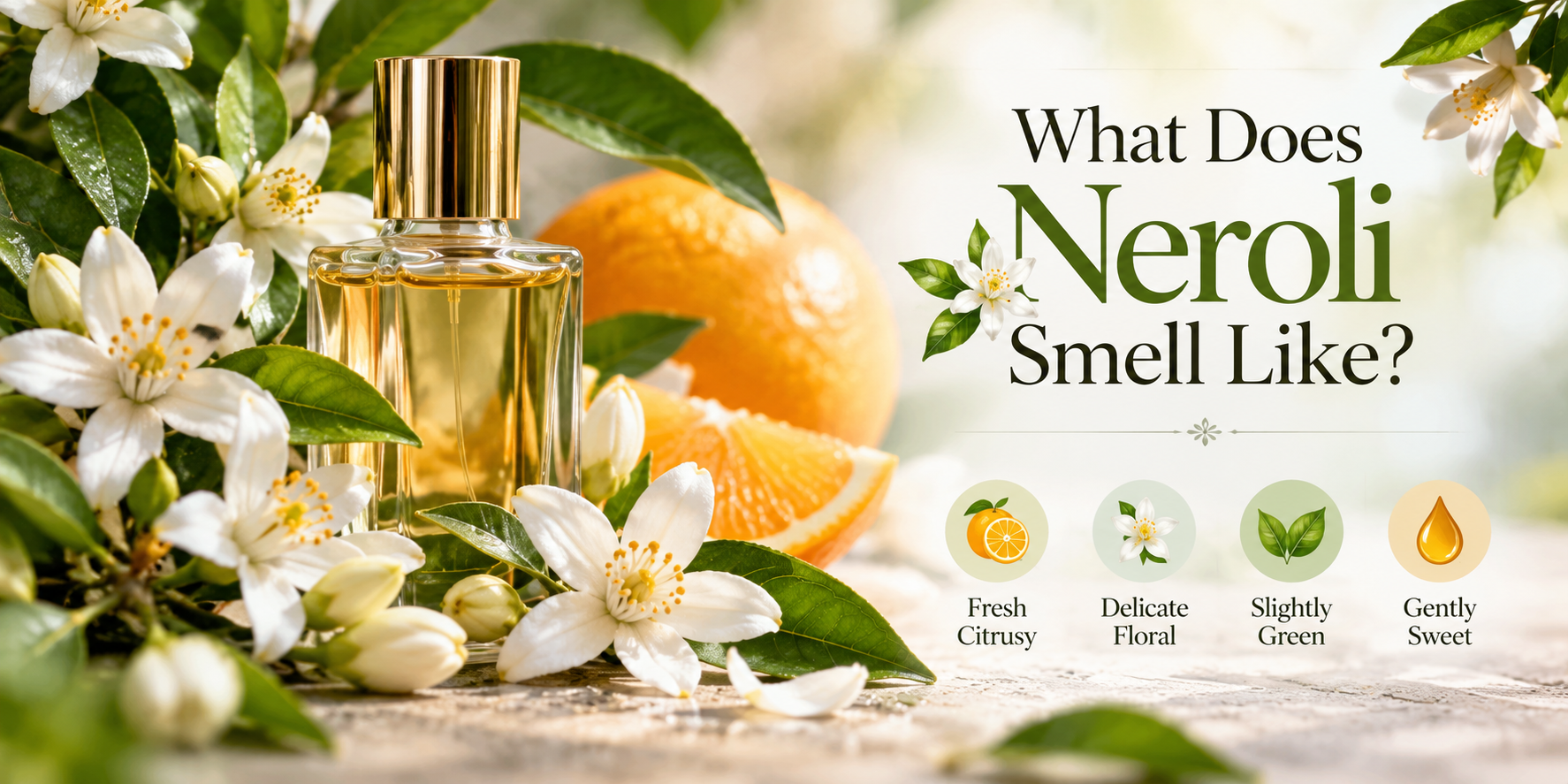
Have you ever noticed a perfume that smells fresh, floral and slightly citrusy without being too sweet? Neroli may be the note behind that impression. If you are wondering What Does Neroli Smell Like?, think of delicate white flowers growing on a bitter orange tree, with a bright citrus freshness, a gentle green edge and a soft hint of honey. Neroli is widely used in perfumery because it brings freshness and floral character together without making a fragrance feel too heavy.
For fragrance lovers in the UK, understanding perfume notes can make choosing a scent much easier. At Aromora, we believe that learning about ingredients helps people recognise the fragrance styles they enjoy, whether they prefer clean everyday scents, elegant floral perfumes or fresh citrus compositions. This guide explains neroli’s scent profile, its botanical origin, how it compares with orange blossom, and what to look for when choosing a perfume that contains this distinctive ingredient.
What Is Neroli in Perfumery?
Neroli is an aromatic oil obtained from the blossoms of the bitter orange tree, botanically known as Citrus aurantium. Unlike orange oil, which is commonly extracted from the fruit peel, neroli comes from the tree’s flowers.
Perfumers value neroli for its balance of citrus freshness and delicate white-floral character. It can brighten a perfume’s opening while adding a natural floral quality that connects the lighter notes with the rest of the composition.
Neroli is also different from orange blossom absolute. Both materials come from the flowers of the bitter orange tree, but they are produced using different extraction methods. Neroli is typically obtained through steam distillation, while orange blossom absolute is commonly produced through solvent extraction. These methods create different aromatic profiles: neroli generally smells fresher and greener, whereas orange blossom absolute often has a richer, warmer and more intensely floral character.
What Does Neroli Smell Like?
Neroli does not smell exactly like a juicy orange or a sugary floral perfume. Its character is more delicate and layered, combining several scent qualities.
1. Fresh and Citrusy
The first impression of neroli is often bright and refreshing. It has a citrus-like quality that may remind you of orange peel, but it is softer and more floral than a straightforward citrus scent.
This freshness makes neroli useful in colognes, summer fragrances and perfumes designed to feel clean and uplifting. It can add brightness without making the composition smell as sharp as some lemon-heavy fragrances.
2. Soft White Flowers
Under the citrus opening, neroli reveals a delicate floral character. This comes from the blossoms themselves and gives the ingredient a light, elegant quality.
The floral side is usually less dense than the rich scent of jasmine or tuberose. Instead, neroli often feels airy and refined, making it suitable for fragrances that need floral detail without becoming overpowering.
3. Green and Slightly Bitter
Neroli can have a green edge that keeps its sweetness under control. Some people notice a slightly bitter quality, similar to the fresh peel of a bitter orange or the green character of a plant stem.
This is an important part of its personality. Rather than smelling like sweet orange sweets, neroli offers a more natural balance between citrus, flowers and subtle bitterness.
4. Gently Sweet and Honeyed
Depending on the perfume formula, neroli may also reveal a soft honey-like sweetness. This quality rounds out the sharper citrus notes and makes the fragrance feel smoother.
However, neroli is not necessarily a sugary ingredient. Its sweetness usually remains restrained, especially when perfumers combine it with green, woody or aromatic notes.
5. Clean and Sometimes Soapy
Some neroli perfumes have a clean, freshly washed character. The combination of citrus and white flowers can create an impression that reminds people of fine soap, fresh linen or a classic cologne.
Not everyone experiences this quality in the same way. A perfume’s other ingredients, concentration and overall balance can make neroli seem greener, sweeter, more floral or more soapy.
The Main Scent Characteristics of Neroli
To make the scent easier to understand, here is a quick breakdown of its common characteristics.
| Scent characteristic | What it smells like | Effect in a perfume |
| Citrusy | Bright, fresh and reminiscent of orange peel | Creates a lively opening |
| Floral | Delicate white blossoms | Adds elegance and softness |
| Green | Fresh leaves and a slightly bitter edge | Keeps sweetness balanced |
| Honeyed | Mild, natural sweetness | Gives the scent a rounded quality |
| Clean | Fresh soap or classic cologne | Creates a neat, refreshing impression |
| Lightly aromatic | Fresh and subtly herbal | Adds complexity to citrus and floral notes |
These descriptions are general guidelines rather than fixed rules. Neroli can smell different depending on the quality of the ingredient and the other notes used in the perfume.
A Closer Look at Neroli’s Fragrance Profile
The easiest way to understand neroli is to imagine how its different qualities work together. It is fresh enough to suit a citrus fragrance, floral enough to add elegance, and green enough to prevent the scent from becoming overly sweet.
What Does Neroli Smell Like? In simple terms, it smells like a fresh orange blossom with a light citrus edge, delicate floral sweetness and a subtle green bitterness. Some compositions highlight its clean, soapy side, while others make it feel warmer and more floral.
This balance explains why neroli works across different fragrance styles. In a light cologne, it can make citrus notes feel more sophisticated. In a white-floral perfume, it can create a fresher opening. In a woody fragrance, it can introduce brightness before the deeper notes become more noticeable.
Neroli vs Orange Blossom: What Is the Difference?
Neroli and orange blossom are closely related, so people often use the names interchangeably. In perfumery, however, they can describe different aromatic materials.
Neroli oil is generally produced through steam distillation of bitter orange blossoms. Orange blossom absolute is commonly obtained through solvent extraction. Because the extraction methods differ, the resulting materials can smell noticeably different.
Neroli tends to have a fresher, greener and more citrus-forward character. Orange blossom absolutely often smells fuller, sweeter, warmer and more intensely floral. These are broad tendencies rather than absolute rules, because the final result depends on the material and the perfume formula.
| Feature | Neroli | Orange blossom absolute |
| Source | Bitter orange blossoms | Bitter orange blossoms |
| Common extraction method | Steam distillation | Solvent extraction |
| Typical scent | Fresh, citrusy and green | Rich, sweet and floral |
| Floral intensity | Often light and airy | Often deeper and fuller |
| Common fragrance effect | Freshness and brightness | Floral warmth and richness |
If you enjoy fresh citrus scents with a floral touch, neroli may appeal to you. If you prefer fuller white-floral perfumes with a sweeter character, orange blossom may be worth exploring.
How Is Neroli Used in Perfume?
Perfumers use neroli to create balance rather than relying on one scent quality alone. Its role changes according to the ingredients surrounding it.
In Fresh and Citrus Fragrances
Neroli works well with bergamot, lemon and mandarin. These ingredients create a bright opening, while neroli adds a floral dimension that makes the fragrance more complex than a simple citrus blend.
In Floral Perfumes
When combined with jasmine, rose or other white-floral notes, neroli can make a bouquet feel lighter and fresher. It provides a link between sparkling citrus notes and the richer floral heart.
In Woody and Musky Fragrances
Neroli can also complement cedarwood, sandalwood and musk. The fresh opening contrasts with the warmer notes, helping the composition feel balanced rather than too heavy.
In Classic Cologne Styles
Neroli has a long association with traditional cologne-style perfumery. Its clean citrus-floral character suits compositions designed to feel refreshing, understated and easy to wear. Modern perfumes can use it in similar ways while combining it with contemporary woody, aromatic or musky accords.
Which Notes Pair Well With Neroli?
Neroli is versatile, but its effect depends on the notes that surround it. The following combinations are useful starting points when exploring perfumes.
- Bergamot and lemon: Emphasise citrus freshness and create a bright opening.
- Mandarin and sweet orange: Add a softer, fruitier citrus character.
- Jasmine and orange blossom: Build a fuller white-floral profile.
- Lavender and aromatic herbs: Give the composition a fresh, herbal quality.
- Cedarwood and sandalwood: Add warmth and a woody contrast.
- Musk: Help create a soft, clean impression in the overall composition.
These combinations describe common perfumery approaches, not a guarantee that every perfume containing these notes will smell the same. The proportions and supporting ingredients make a significant difference.
Is Neroli a Good Choice for Everyday Wear?
Neroli can be a good option for everyday wear if you enjoy fresh, floral and citrus-led fragrances. It often suits people who want a scent that feels polished without being excessively sweet or heavy.
For daytime use, look for perfumes that combine neroli with citrus, light woods or clean musks. These combinations can work well for everyday activities, office settings and casual occasions, although the strength of the finished perfume matters as much as the notes themselves.
For evening wear, consider compositions that pair neroli with richer florals, amber or woods. These supporting notes can give the fragrance a deeper character while retaining some of neroli’s freshness.
There is no universal rule about when to wear neroli. Your preference, the perfume’s overall composition and the amount you apply all influence how suitable it feels for a particular occasion.
Does Neroli Smell the Same on Everyone?
No. A perfume containing neroli may smell slightly different from one person to another. Skin temperature, skin condition, the fragrance formula and the environment can influence how a perfume develops and how strongly you notice particular notes.
The ingredient may also be difficult to identify in a complex composition. For example, a fragrance with prominent bergamot may make the opening seem more citrusy, while jasmine or orange blossom can bring its floral qualities forward.
To understand a perfume properly, test it on your skin rather than relying only on the opening spray or a description of its notes.
A practical way to test it is to:
- Spray a small amount on clean skin.
- Notice the opening for the first few minutes.
- Revisit the scent after around 30 minutes.
- Check how it develops over the next few hours.
- Decide whether you enjoy the complete fragrance, not just the first impression.
This approach helps you understand whether the perfume’s balance suits your taste.
How to Choose a Neroli Perfume in the UK
When shopping for a neroli fragrance in the UK, start by deciding which side of the scent you enjoy most. Some perfumes highlight citrus freshness, while others emphasise white flowers, aromatic herbs or warm woods.
Read the full fragrance description rather than choosing a perfume based on neroli alone. Look at the top, heart and base notes to understand how the scent may develop. If you are unsure, try a sample before purchasing a full bottle.
Consider these factors when comparing options:
- Your preferred scent family: Choose citrus-floral compositions for freshness or woody-floral blends for more depth.
- The occasion: Think about whether you want a subtle daytime scent or a richer fragrance for evenings.
- The concentration: Eau de toilette and eau de parfum can differ in strength and composition, but concentration alone does not guarantee performance.
- The other notes: Bergamot, jasmine, musk and sandalwood can all change how neroli feels in the finished perfume.
- Your personal preference: A fragrance that smells elegant to one person may seem too green or soapy to another.
Remember that a fragrance description is a useful guide, not a guarantee of how a perfume will smell on your skin.
Is Neroli Safe in Perfume?
Neroli is used as a fragrance ingredient, but natural origin does not automatically mean that an ingredient is suitable for every person or every application. Fragrance ingredients, including some aromatic compounds found in essential oils, can cause irritation or allergic reactions in susceptible individuals.
A finished perfume is formulated for its intended use, so follow the product label and avoid applying concentrated essential oil directly to your skin unless it has been appropriately formulated for that purpose. If you have a known fragrance allergy or experience irritation, stop using the product and seek appropriate professional advice.
It is also useful to distinguish between a perfume that lists neroli as a scent note and one that contains a particular natural neroli extract. A fragrance note describes the intended smell; it does not, by itself, confirm the exact ingredient or extraction method used.
Final Thoughts
Neroli offers a distinctive balance of citrus freshness, delicate white flowers, green nuances and restrained sweetness. It is more floral than a straightforward citrus note, yet usually lighter and fresher than richer white-floral materials such as orange blossom absolute.
Understanding these characteristics can help you choose a fragrance that matches your preferences. Whether you enjoy a clean cologne, a bright summer perfume or a more complex floral-woody composition, neroli is worth exploring because it can add freshness without relying on excessive sweetness.
When comparing fragrances, look beyond the note list and consider the complete composition. Test the perfume on your skin, give it time to develop and decide whether its overall character suits you. That is the most reliable way to discover whether neroli belongs in your personal fragrance collection.
Frequently Asked Questions About Neroli
1. Does neroli smell like oranges?
Neroli has a citrus character, but it comes from the flowers of the bitter orange tree rather than the fruit peel. Its scent is more floral, green and delicate than the smell of a typical orange.
2. Is neroli a sweet or fresh fragrance note?
Neroli is usually considered fresh and citrus-floral, with a gentle sweetness. It may smell greener or more honeyed depending on the perfume’s formula.
3. What is the difference between neroli and orange blossom?
Both come from bitter orange blossoms, but they are generally produced through different extraction methods. Neroli is usually fresher and greener, while orange blossom absolute often smells richer and more intensely floral.
4. Is neroli suitable for men and women?
Yes. Neroli is used in fragrances marketed to men, women and all genders. Its appeal depends on the complete perfume composition rather than the ingredient’s gender association.
5. Which perfume notes work best with neroli?
Bergamot, lemon, mandarin, jasmine, lavender, cedarwood, sandalwood and musk can all complement neroli. The best combination depends on whether you prefer a citrusy, floral, aromatic or woody fragrance.
6. Does neroli last a long time in perfume?
Longevity varies with the perfume’s formula, concentration, supporting ingredients and the wearer’s skin. Neroli’s fresh qualities may be more noticeable in the opening, but its presence in a composition can remain perceptible for different lengths of time.